Screen Time: Friend or Foe?
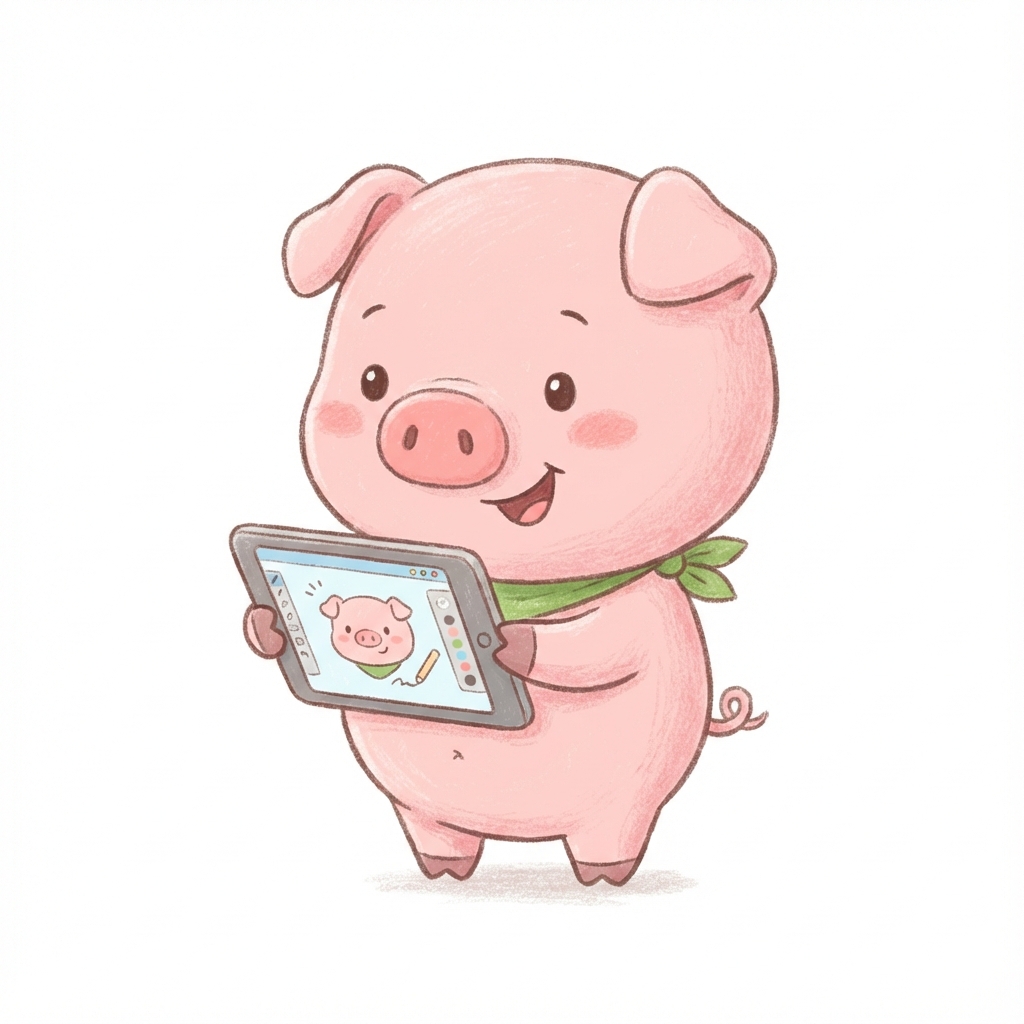
"Don't sit too close to the TV!" or "Put that iPad away!" — common phrases in every household. But when it comes to vision therapy, screens might actually be the solution, not the problem.
Passive vs. Active Screen Time
Not all screen time is created equal. The American Academy of Pediatrics distinguishes between:
- Passive Consumption (The "Bad"): Mindlessly watching videos or cartoons. The eyes are fixed, blinking reduces, and there is little cognitive engagement. This can lead to eye strain.
- Active Engagement (The "Good"): Educational games, creative apps, or video calls. The user interacts, makes decisions, and moves their eyes to scan the screen.
Piggy Peekaboo falls into the "Active" category. It demands constant visual scanning, focus switching, and hand-eye coordination.
The Research Idea: Perceptual Learning
For a lazy eye to engage, it needs to work actively. Traditional patching time is often wasted because the child is bored and just stares blankly (even with a patch on). Researchers study structured, active visual practice under the name Perceptual Learning.
In published perceptual-learning trials (studying research programs, not Piggy Peekaboo), researchers have reported encouraging results and often better compliance, since games hold a child's attention. Digital games engage the brain in tasks like these:
- Process High Contrast (Gabor Patches): Piggy Peekaboo uses specific color palettes and contrast patterns in a style similar to the Gabor patches studied in vision research.
- Overcome Crowding: Finding a target among clutter involves separating objects from the background, the kind of "crowding" task that vision research into amblyopia often examines.
- Sustain Attention: The fun factor keeps the child's brain engaged, releasing dopamine which aids neuroplasticity (learning).
The 20-20-20 Rule
Even with engaging games, eye rest is crucial to prevent digital eye strain. We recommend the 20-20-20 rule:
Every 20 minutes, look at something 20 feet (6 meters) away for at least 20 seconds.
Piggy Peekaboo's levels are designed to be short, naturally encouraging breaks between sessions.
Conclusion: The screen is just a tool. Used passively, it's a distraction. Used actively with purpose, it can be a fun companion to your prescribed routine.
Start PlayingSelected References:
- Li, R. W., Ngo, C., Nguyen, J., & Levi, D. M. (2011). Video-game play induces plasticity in the visual system of adults with amblyopia. PLoS Biology, 9(8).
- Bocqué, C., et al. (2023). Gamification to Support Adherence to a Therapeutic Amblyopia Treatment for Children. JMIR Pediatrics and Parenting, 6(1).