Navigating School with Amblyopia: A Parent's Guide
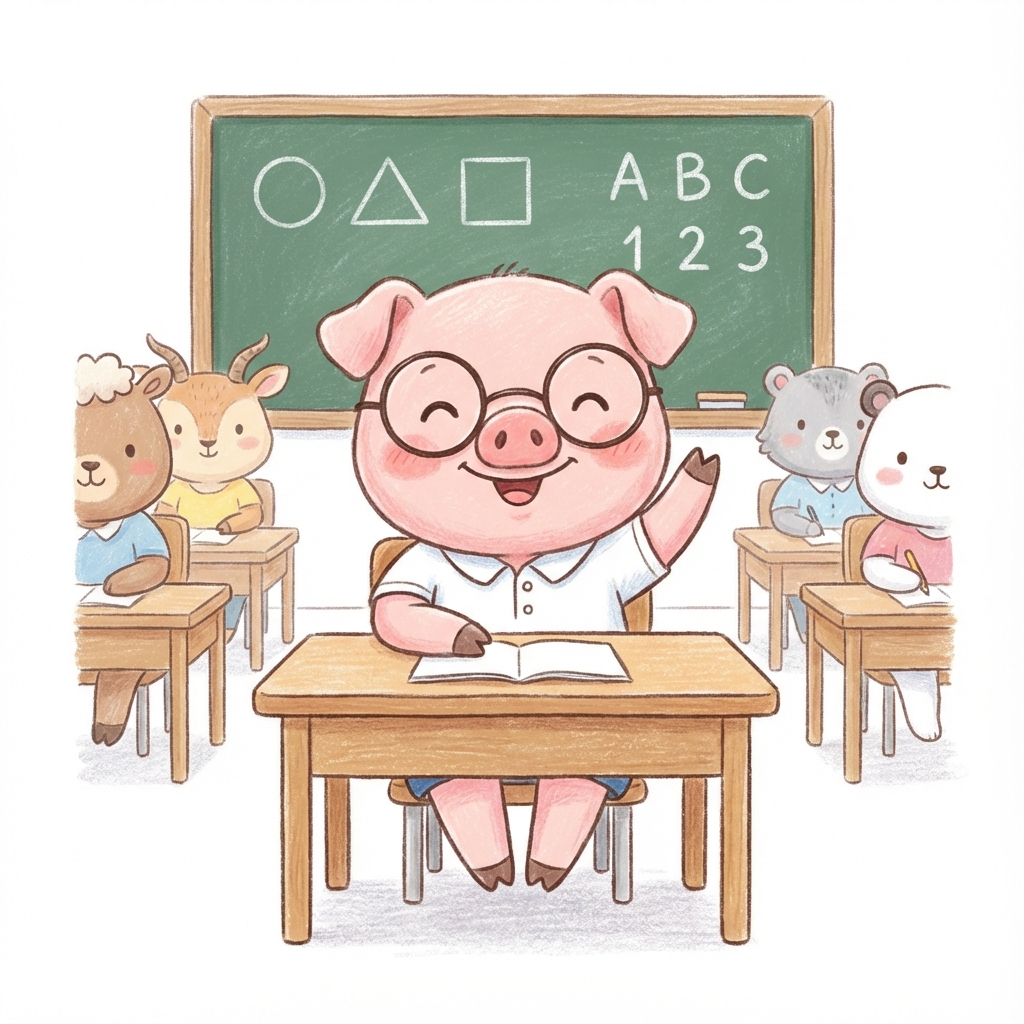
School can be visually demanding. For a child with amblyopia (lazy eye), the classroom presents unique challenges—from reading the whiteboard to catching a ball in PE. Here is how you can set them up for success.
1. Seating Matters
Advocate for your child's seating arrangement. This is often the simplest yet most effective change.
- Front and Center: Request a seat in the front row, preferably near the center. This reduces the distance to the board and minimizes the need for awkward head turning if they have strabismus.
- Lighting: Ensure they are not sitting where there is a glare on the board, which reduces contrast and makes reading harder for amblyopic eyes.
2. The Impact on Reading Speed
Medical studies indicate that children with amblyopia read significantly slower than their peers—often averaging around 148 words per minute compared to ~200 words per minute in children with normal vision. This is mostly due to:
- Inefficient Saccades: The eye struggles to jump accurately from one word to the next.
- Fixation Instability: Keeping the gaze steady on a single word is physically tiring.
If your child is reading slowly, it is likely a mechanical vision issue, not a learning disability.
3. Managing Visual Fatigue
Amblyopic eyes work harder to focus, leading to faster exhaustion.
- The 20-20-20 Rule: Teach your child to take breaks. Every 20 minutes, look at something 20 feet away for 20 seconds.
- Declutter: Handouts with dense text can be overwhelming. Ask teachers if they can provide materials with larger fonts or more white space.
4. Physical Education (PE) & Safety
Lack of depth perception (stereopsis) can make sports difficult and sometimes dangerous.
- Ball Sports: Catching a flying ball is hard without 3D vision. Inform the PE teacher so they don't mistake a missed catch for lack of effort or coordination.
- Stairs and Uneven Ground: Be aware that your child might be more prone to tripping.
- Protective Eyewear: If your child has one "good eye," protecting it is paramount. Consider polycarbonate sports goggles for PE.
5. Communication is Key
Your child's teacher might not understand amblyopia.
- Explain the Patch: If your child patches at school, explain to the teacher why it's necessary and ask for their support in preventing teasing.
- Not "Lazy" Behavior: Sometimes, visual fatigue looks like daydreaming or disinterest. Ensure the teacher knows the difference.
Empower Your Child. With small adjustments, school can be a place of joy, not struggle. Keep the dialogue open with their educators.
Selected References:
- Kelly, K. R., et al. (2015). Amblyopic children read more slowly than controls under natural, binocular reading conditions. Journal of AAPOS, 19(6), 515-520.