Patching vs. Atropine: Which is Right for You?
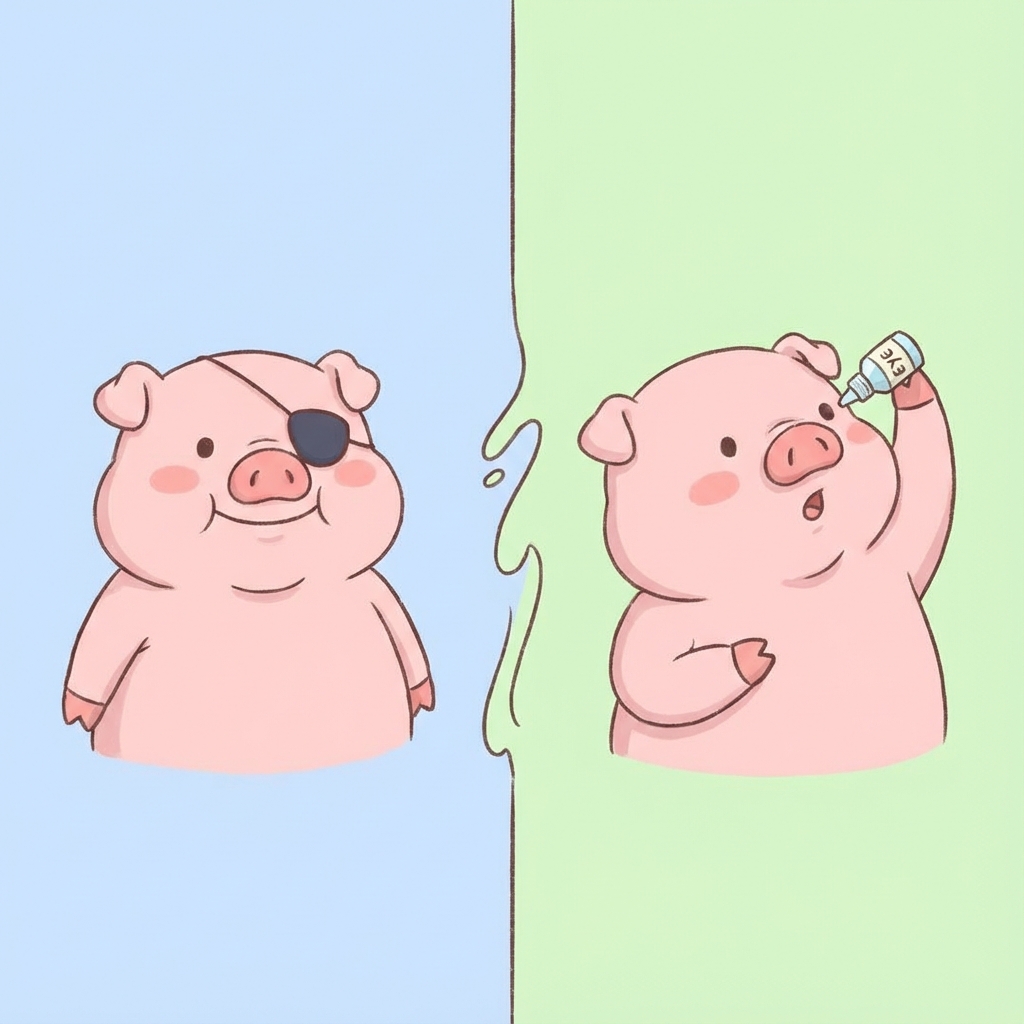
For decades, the "sticky patch" was the undisputed king of lazy eye treatment. But for many families, the daily battle to keep the patch on is exhausting. Enter Atropine drops: the "invisible" alternative. But which one is better?
The Goal: Penalization
Before comparing them, observe that both methods have the exact same goal: Penalization. They both punish the "strong" eye to force the brain to use the "lazy" (amblyopic) eye.
- Patching: Physically blocks vision.
- Atropine: Chemically blurs vision.
Treatment 1: The Adhesive Patch
The classic method involved sticking an adhesive bandage over the strong eye for 2 to 6 hours a day (sometimes more).
✅ The Pros
- Total Occlusion: It blocks 100% of vision. There is no cheating (unless they peek!).
- No Side Effects: No systemic drugs entering the body.
- Quick Reversal: Take it off, and vision returns to normal instantly.
- Cost: Boxes of patches are relatively affordable.
❌ The Cons
- Compliance Battles: Children hate them. They pull them off, try to peek, or cry. It can strain the parent-child relationship.
- Skin Irritation: The adhesive can cause rashes on delicate skin.
- Social Stigma: Bullying or unwanted questions at school/playground.
Treatment 2: Atropine Drops
Atropine is a medication drop put into the strong eye (usually once a day or on weekends). It dilates the pupil and paralyzes the focusing muscle, making near vision blurry in that eye.
✅ The Pros
- Invisible Treatment: No one knows the child is being treated. No bullying.
- "Set it and Forget it": You put a drop in the morning (or night), and the work is done. No negotiating throughout the day.
- Better Compliance: Studies show parents report much less stress and higher adherence.
❌ The Cons
- Light Sensitivity: Because the pupil is dilated, the child will be sensitive to sunlight. Sunglasses and a hat are a must outdoors.
- Side Effects: Use of a drug can have side effects like eye redness, headache, or rarely, systemic effects (dry mouth, flushing).
- Near-Vision Only: It mostly blurs near vision. Distance vision might remain okay in the strong eye, which might reduce effectiveness for distance tasks.
What Does Science Say?
At the age of 7 to 12, treating moderate amblyopia with weekend atropine was found to provide similar vision improvement to patching 2 hours daily.
How Piggy Peekaboo Fits In
Whether you choose the patch or the drop, the brain needs active stimulation while the strong eye is penalized.
- With Patching: Piggy Peekaboo is a perfect activity to pass the time and make the 2 hours fly by.
- With Atropine: Since Atropine blurs near vision in the good eye, playing a game on a tablet (a near task) becomes difficult for the strong eye. This forces the lazy eye to take over the tracking and searching tasks in the game, making it an excellent companion therapy.
Conclusion
The "best" treatment is the one your child will actually do. If patching is a daily war, ask your doctor about Atropine. If your child tolerates the patch well, stick with it! Both paths lead to the same destination: better vision.
Support your therapy with fun.
Play Piggy PeekabooClinical References
- PEDIG ATS1 Study: Pediatric Eye Disease Investigator Group. (2002). A randomized trial of atropine vs. patching for treatment of moderate amblyopia in children. Archives of Ophthalmology, 120(3), 268-278.
- Follow-up Study: Pediatric Eye Disease Investigator Group. (2004). Two-year follow-up of a 6-month randomized trial of atropine vs patching for treatment of moderate amblyopia in children. Archives of Ophthalmology, 122(10), 1499-1504.