Amblyopia vs. Strabismus: What's the Difference?
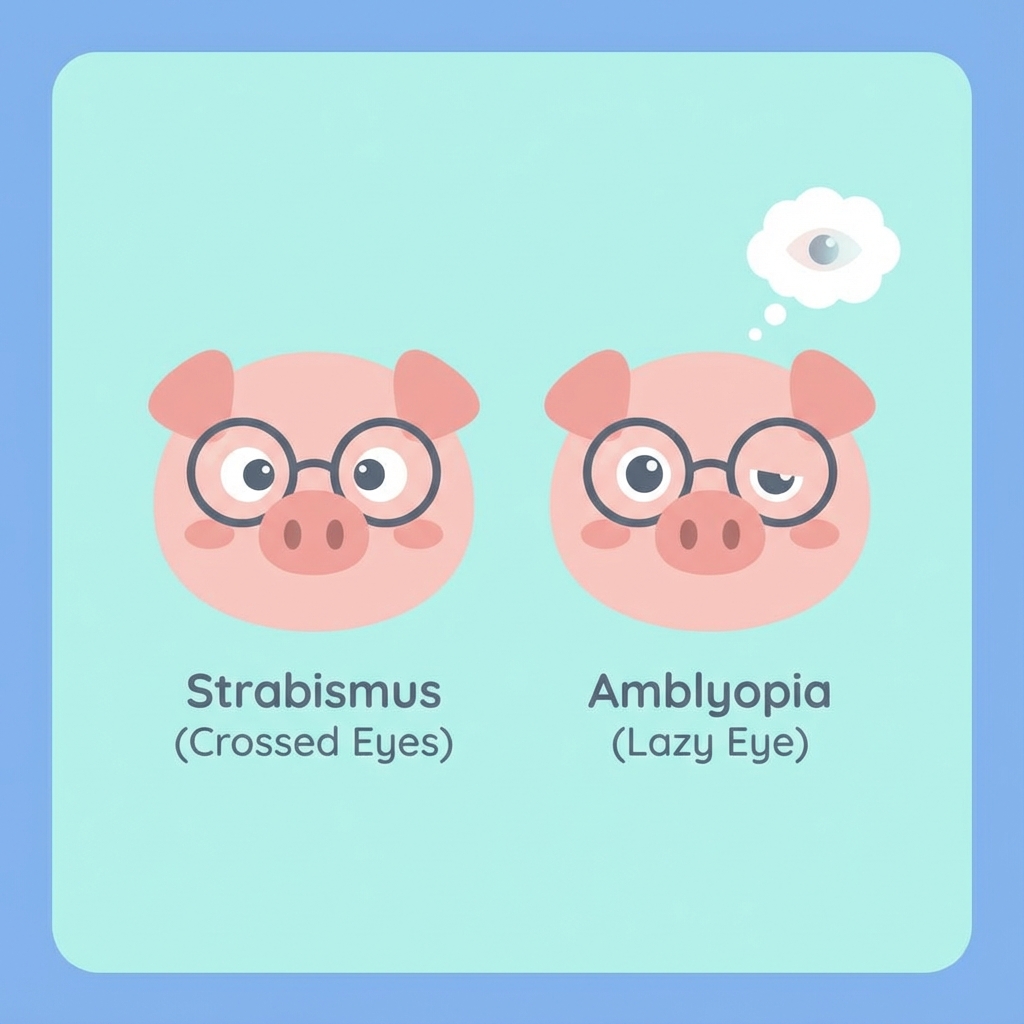
"Lazy Eye" (Amblyopia) and "Crossed Eyes" (Strabismus) are frequently confused by parents. While they are distinct conditions, they are closely linked and often occur together. Understanding the difference is the first step towards effective treatment.
Simple Definitions
Strabismus (The "Physical" Problem): A misalignment of the eyes. One eye looks straight, while the other turns in, out, up, or down. It's often a muscle coordination issue.
Amblyopia (The "Brain" Problem): Reduced vision in one eye that cannot be fully corrected with glasses alone. The eye looks normal, but the brain ignores its signals.
How Are They Related?
Strabismus is actually one of the leading causes of Amblyopia.
When a child has Strabismus, their eyes point in different directions, sending two conflicting images to the brain. To avoid the confusion of double vision (diplopia), the developing brain may decide to "turn off" or suppress the signal from the misaligned eye.
Over time, this suppression leads to Amblyopia. The eye typically remains physically healthy, but the neural connection between that eye and the brain shuts down due to disuse.
Comparison Table
| Feature | Strabismus | Amblyopia |
|---|---|---|
| Main Issue | Eye Misalignment (Muscles) | Poor Vision (Brain) |
| Visible Signs? | Yes (Crossed/Wandering Eyes) | Often No (looks normal) |
| Treatment focus | Aligning eyes (Surgery/Glasses) | Improving vision (Patching) |
Can You Have Both?
Yes, absolutely. This is called Strabismic Amblyopia. In these cases, treatment is usually a two-step process:
- Treat the Amblyopia first: Doctors usually prioritize restoring vision in the lazy eye. This is done via refractive correction (glasses) and occlusion therapy (patching).
- Fix the Strabismus: Once vision in both eyes is roughly equal, surgery or vision therapy may be used to align the eyes physically.
Note: If you straighten the eyes first without treating the amblyopia, the vision in the lazy eye will likely remain poor!
Treatment Approaches
Treating Strabismus
- Glasses: Sometimes, correcting farsightedness can straighten the eyes.
- Eye Muscle Surgery: To loosen or tighten eye muscles to align them.
- Vision Therapy: Exercises to train the eyes to work together.
Treating Amblyopia
- Patching (Occlusion Therapy): Covering the strong eye to force the brain to use the weak eye.
- Atropine Drops: Blurring the strong eye to encourage use of the weak eye.
Making Patching Easier
If your child has Amblyopia (caused by Strabismus or otherwise), patching is likely part of the journey. Piggy Peekaboo helps by turning this challenging daily routine into fun, interactive playtime.